We’re addicted to old sci-fi, and thought we’d start trawling round for some lesser known reads from the golden age in this genre. Here’s five worth a look at from the 1970s:
- “Roadside Picnic” by Arkady and Boris Strugatsky (1972) – This Soviet-era science fiction novel explores the aftermath of an alien visitation known as the Visitation Zone. It delves into themes of human nature, existentialism, and the consequences of contact with advanced civilizations.
- “The Stars My Destination” by Alfred Bester (1956) – Although not from the 1970s, this science fiction novel gained recognition during that era. It follows the story of Gully Foyle, a man seeking revenge in a future where individuals can teleport. The book delves into themes of transformation, identity, and human potential.
- “The Female Man” by Joanna Russ (1975) – Russ’s novel is a groundbreaking work of feminist science fiction. It explores parallel universes and features four women from different realities who meet and confront societal expectations, gender roles, and patriarchal structures.
- “Engine Summer” by John Crowley (1979) – Set in a post-apocalyptic world, “Engine Summer” tells the story of Rush That Speaks, a member of a nomadic society, as he embarks on a quest for knowledge and meaning. It explores themes of memory, storytelling, and the nature of truth.
- “The Iron Dream” by Norman Spinrad (1972) – In this alternative history novel, Spinrad presents a metafictional work that imagines Adolf Hitler as a science fiction author. Through Hitler’s imagined novel, “The Lord of the Swastika,” Spinrad critiques fascism, totalitarianism, and the power of propaganda.
These lesser-known science fiction books offer unique perspectives, exploring themes such as social commentary, gender, identity, post-apocalyptic settings, and alternative history. While they may not have achieved the same level of mainstream recognition as other works from the era, they are worth exploring for their distinct ideas and storytelling.
 After the ride that was Ninefox Gambit, a reader could be asked how to top that. It’s a question of sequels, and one that often has a disappointing answer. In Raven Stratagem, Yoon Ha Lee shows that they can work. Taking place shortly after the events of the previous volume – one I suggest people go to – the action moves as a ghost of infamous general, the fleet he hijacks, the empire that rules them all , and the belief that goes with the imperial calendar. Much of this universe seems based around the concept of the calendar, with conflict often based on the view of a calendar.
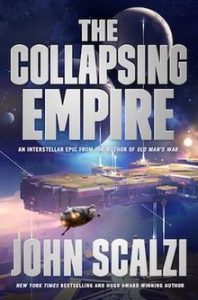 One of the tropes of modern science fiction is the large interplantary empire. From Asimov’s Foundation, to Lucas’s Star Wars, the Empire and its machinations is one of the cogs that have helped keep the genre going. It is also one of the reasons why the large Empire falling has become a bit of a cliche as well. With a name like The Collapsing Empire, you might be inclined to be a little disappointed with John Scalzi. After reading this novel, you won’t be.
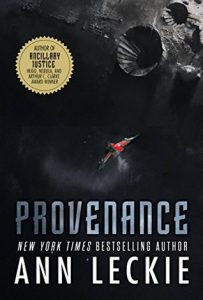 When your first book wins three major awards in the genre, you tend to set yourself a very high bar. Anne Leckie follows her Ancillary Trilogy with Provenance, a new novel that takes place in the same universe as her previous work.
 In the near future, the ice caps are going to melt, sea levels will rise, and disaster will hit the planet. Unlike other apocalypses in fiction, Kim Stanley Robinson seems to suggest that we’ll do alright after all this. New York 2140 looks at the city of New York after the disaster. The world has adjusted, with New York becoming a city of canals, where keeping the water out is as important as getting around. Into this world, Robinson places the importance of the finance trader.
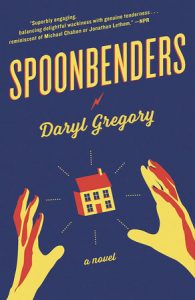 When a family of psychics gets discredited in the 1970s, you would think that their story would end right there.
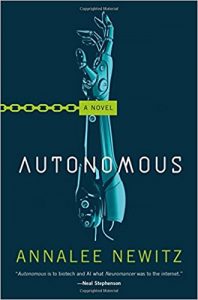 In the future, corporations will rule everything and crafted drugs will help people achieve many things. Those on the fringe will fight against this same world. From this description, Autonomous by Annalee Newitz would seem like another rip off William Gibson’s Neuromancer, but it’s more than that.
 When read a story, we assume that what the author is telling us, is the truth. But what would happen if a number of classic stories were wrong ?
Recent Comments